Shipping
SHIPPING
A common question we receive is, “How are you going to ship the plants?”
Method of shipment is based on the number of trays and size of the plants on the order.
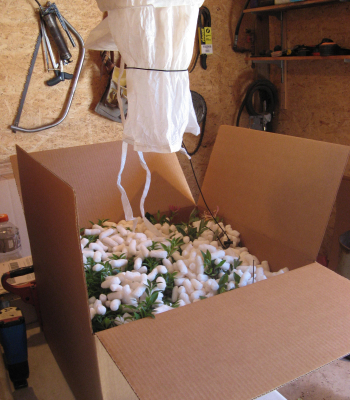
For orders totaling fewer than 15 or so trays, it’s usually most efficient to box them up and send them UPS. Nobody enjoys packing peanuts, but they remain the easiest way to make sure your plants arrive safely when boxed.
Larger orders are shipped on palletized racks rather than in boxes. These are made to fit the order and will ship on a semi or straight truck. Lift gate service is available on request at an additional cost.
Our shipping racks hold up to 48 trays. We can make modifications to the racks to accommodate taller upright plants or reduce the height of the rack with fewer shelves for smaller orders. The racks are very durable and can be used after receiving the shipment to move the plants efficiently in your operation.
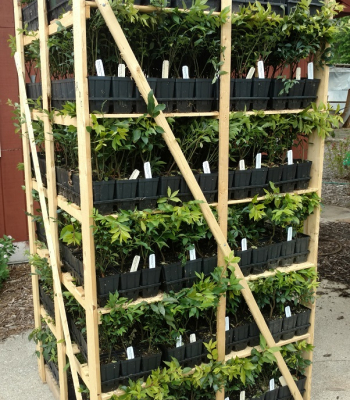
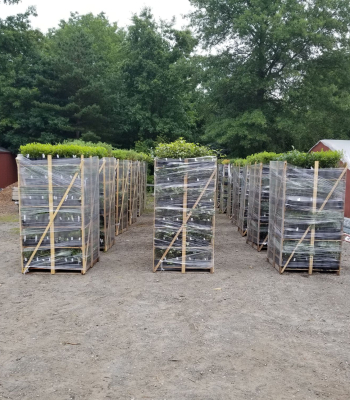
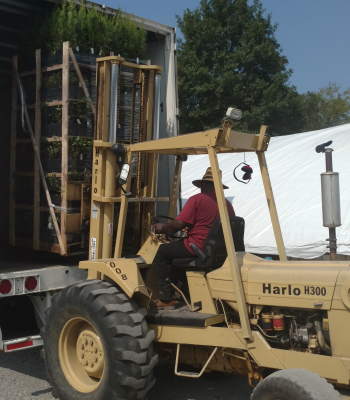
The palletized racks can be shipped LTL (less than truckload) or on a Multi-Stop Load. LTL shipping is more expensive and less reliable than shipping on a Multi-Stop Load, but it may be the only option if the delivery does not share a common route with other customers or is out of season.
A multi-stop load is a truck that delivers on a route directly from our nursery to multiple customers. The advantages are many! Pallets get handled less, lowering the risk of damage. Plants are received more quickly. The cost is often half of what it would be to ship LTL.
To arrange a multi-stop load, we often must adjust ship dates. While we can ship most months of the year, shared trucks are usually shipped in April, May or June when shipping is at it’s peak. When necessary, we ship on temperature-controlled carriers.
Because of the myriad of factors that influence the cost of shipping, we do not offer shipping quotes greater than a week in advance.
Customers may arrange their own shipping or come to the nursery to pick up their order by appointment only. However, customers may not pull their own orders.